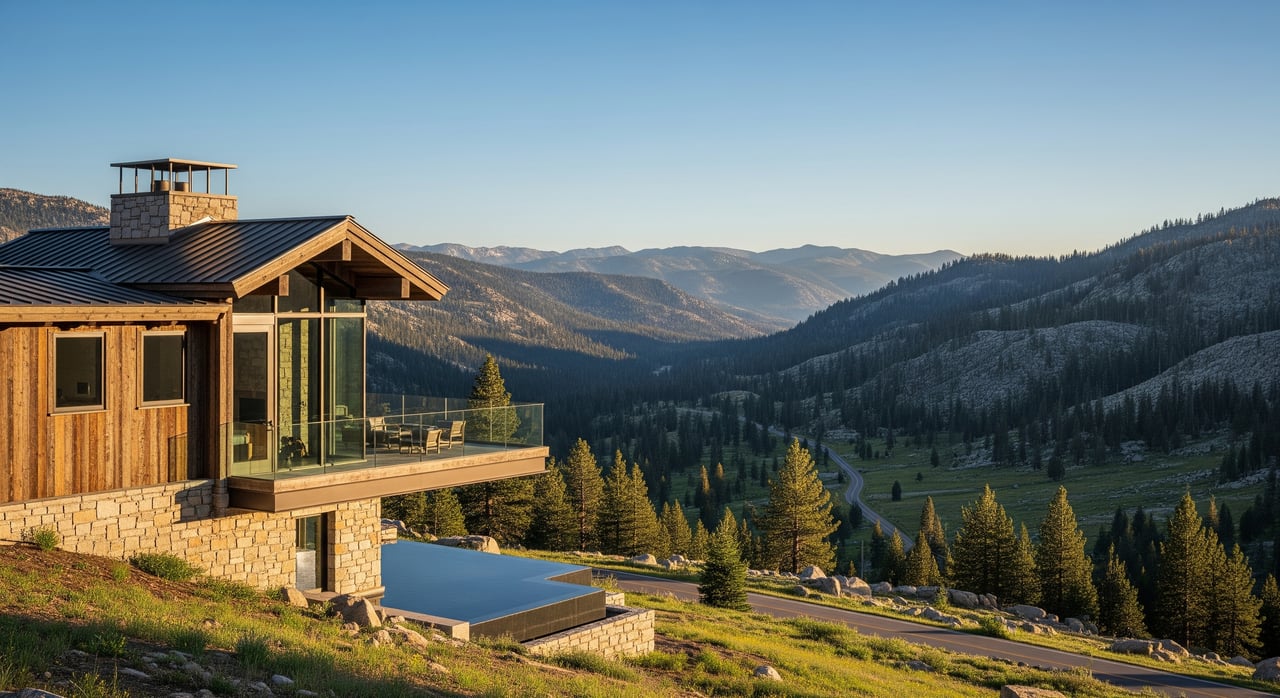
Wondering how much snow you really want at your mountain place? On the Ebbetts Pass corridor, a few miles and a few thousand feet can change winter from light and easy to deep and intense. You are not just choosing a town. You are choosing an elevation, which shapes your snow load, access, utilities, and day‑to‑day comfort. In this guide, you will learn how elevation from Avery to the high country affects life and ownership so you can match your purchase to your lifestyle. Let’s dive in.
How elevation shapes life on SR 4
Temperature and snowpack basics
As you climb from Avery, air temperature generally drops. A practical planning rule is 3 to 5 degrees Fahrenheit cooler for every 1,000 feet of elevation gain, with about 3.5 degrees as a common mid‑range estimate. Cooler temperatures increase heating needs and extend the period when plumbing and systems can freeze. Orographic lift over the Sierra also brings more precipitation at higher elevations, which means more snow and longer snowpack duration as you head toward the pass.
Access and closures
Winter travel conditions change with elevation. State Route 4 and local feeder roads can see chain controls and temporary closures during storms, and some road segments have seasonal closures higher up. Secondary and private roads are often plowed later than main routes, and long driveways may require regular snow removal. Always confirm who is responsible for plowing your road and driveway, and get copies of any county, HOA, or private road maintenance agreements.
Safety and emergency services
Response times can lengthen in winter as you go higher due to road conditions. Consider proximity to medical care and the time it takes emergency services to reach your property during storms. If you plan to live year‑round in higher snow zones, plan for short periods when you may be isolated. Keep an emergency plan that includes heat, water, food, and communication backups.
Three elevation bands from Avery to the pass
Elevation varies widely along the corridor, so treat these bands as planning guides. Local microclimates and slope orientation can change conditions from one street to the next.
Low montane near Avery, about 3,200 to 4,200 feet
Expect the mildest winters on the corridor. Snow is light to occasional moderate during storms, and it usually melts faster. Access is the most reliable here, with fewer winter closures and shorter drives to everyday services. Utilities and telecom coverage are typically more consistent, and many homes use standard winter prep rather than heavy snow systems.
Mid‑mountain, about 4,200 to 5,800 feet
This is where winter starts to feel like winter every year. You can expect reliable seasonal snow, sometimes measured in feet in stronger winters. Driveways and private roads often need regular plowing, and you may face chain controls during storms. Power outages and Public Safety Power Shutoff events are possible, and broadband or cell service can be more variable than at lower elevations.
High country, about 5,800 to 7,500 plus feet
Here, deep and persistent snowpack is common, and the year has two distinct seasons. Summer is peak time for recreation and access, while winter can bring extended periods when roads and driveways are impassable without plowing or specialized vehicles. Year‑round living is possible, but it requires robust systems, a strong tolerance for winter maintenance, and acceptance of occasional isolation. Many properties rely on on‑site systems and backup power, and internet service may depend on satellite options.
Utilities and home systems to plan for
Power and PSPS readiness
Most homes along the corridor are served by overhead distribution lines that are exposed to wind and wildfire risk. Outages can happen, and PSPS events are part of the planning picture in higher risk weather. Many owners use standby generators, portable generators, or solar plus batteries for backup. If you need consistent power for well pumps, heat, or medical equipment, include backup capacity in your purchase and inspection plan.
Heating and fuel
Common heating systems include propane furnaces, wood or pellet stoves, electric heat pumps, and electric resistance heat. Colder elevations increase fuel use and delivery needs. If a propane truck cannot safely reach your driveway during storms, deliveries may be delayed, so tank size and plow access matter. Wood heat can be a dependable backup if you store dry wood and maintain your stove and chimney.
Water and septic
Many properties use private wells and septic. Higher elevations and colder microclimates increase freeze risk, so look for insulated and protected lines, pump houses, and pressure tanks. Ask for well logs, production data, and water quality results. Septic systems should be designed and sited for local soils and winter temperatures, with proper depth and insulation to reduce freeze exposure.
Internet and communications
Cell coverage varies widely by carrier and site. Some pockets have strong service, others have weak or none. Where terrestrial broadband is limited, satellite internet can fill the gap. If reliable internet is essential, verify options at the property during due diligence.
Waste, mail, and deliveries
Trash and recycling pickup schedules can be more limited than in urban areas. Parcel deliveries may have rules for winter access or use pickup points when roads are snowed in. Rural mail delivery is common, but plan for delays during major storms.
Ownership style, year‑round vs weekend
Year‑round readiness
Living full‑time at higher elevations works well for many owners. It also demands planning. Confirm that your roads and driveway are plowable, that your roof and structure are rated for local snow loads, and that your heating system has enough capacity for extended cold. Consider backup power for your well, heat, and communications, and budget for fuel, snow removal, and maintenance.
Weekend and second‑home strategies
If you plan to use a home on weekends or seasonally, decide how you will winterize systems when you are away. Some owners drain water lines or maintain minimum heat to protect plumbing. If access is not guaranteed after storms, you may choose to enjoy the home mostly in shoulder seasons and summer. A clear plan for plowing, keyholder checks, and system monitoring can reduce headaches.
Costs, insurance, and codes
Snow removal and structural upkeep
Snow removal is a major line item in mid and high elevations. Get estimates for plowing your driveway, confirm if there is a shared road agreement, and ask about typical storm response times. Roofs and structures need attention in snow country. Look for snow‑load ratings, ice dam mitigation, and safe roof access for clearing when needed.
Insurance and defensible space
Insurance availability and premiums can be influenced by wildfire risk, road access, and liability for private roads. Ask local insurance agents for quotes that reflect winter perils such as snow load and ice, and for wildfire coverage. Defensible space rules apply across many elevations, and proper maintenance can support safety and insurability.
Permits, codes, and siting
Higher snow zones often require specific design standards. Local building codes may call for roof snow‑load design, frost‑protected foundations, and septic or well designs suited to local soils and freeze depths. If your parcel adjoins federal land, additional considerations may apply. Always verify requirements with the appropriate county offices during due diligence.
Environmental and geohazard checks
Mountain parcels can include steep slopes, drainages, or rock faces. Site‑specific risks such as slope instability, rockfall, or avalanche exposure may warrant professional input. For lower slopes and drainages, check flood mapping. Erosion control rules and best practices help protect water quality and property.
Buyer due‑diligence checklist for the Avery corridor
Use this list to guide your offer and inspection steps:
- Confirm your parcel’s exact elevation and sun exposure. Request a topo or GIS map for reference.
- Review historical snow and road closure behavior for your street. Ask for records from Caltrans and county public works.
- Identify who plows your road and driveway. Get written copies of county, HOA, or private road agreements and the cost history.
- Verify utilities. Note the electric provider, backup power setup, propane suppliers, well depth and pump type, septic permits, and on‑site internet and cell performance.
- Inspect structural and winter systems. Ask about roof snow‑load rating, insulation, heating capacity, pipe freeze protection, and foundation frost depth.
- Confirm water reliability. Request well logs, recent yield tests, and water quality results. Check freeze protection for pumps and lines.
- Price insurance early. Ask local agents about wildfire, snow load, and private road liability coverage, plus typical premiums for the neighborhood and elevation.
- Ask about emergency services. Note the nearest clinic or hospital and typical response times during winter storms.
- Review zoning and permits. Contact county planning and building for current rules and any constraints on additions, outbuildings, or short‑term rentals.
- Screen for environmental hazards. Review fire severity maps, flood maps, and any landslide or seismic data. On steep or complex terrain, consider a geotechnical opinion.
Match elevation to your lifestyle
- Choose the Avery foothills if you want easier year‑round access, lighter snow, and more consistent services, with winter prep that looks familiar to most owners.
- Choose mid‑mountain if you want a true winter experience and can plan for regular plowing, backup power, and a bit more patience during storms.
- Choose the high country if deep snow and summer‑peak living excite you, and you are ready for robust systems, higher winter maintenance, and occasional isolation.
There is no wrong choice, only the best fit for your goals. The key is matching the elevation band to how you plan to live and use the home, then verifying parcel‑specific details before you buy.
Work with a local guide who knows the corridor
Buying in mountain markets is about more than the house. It is about logistics, seasons, and confidence that your systems will perform when weather gets real. A local, relationship‑driven team can help you weigh tradeoffs by elevation, read between the lines on seller disclosures, and line up the right inspections. If rental income or hands‑off care matters, integrated vacation‑rental and property‑management options can simplify ownership after closing.
Ready to find the elevation that fits your lifestyle along Ebbetts Pass? Reach out to Kip Machado & Team to talk through your plans and next steps.
FAQs
Can I live year‑round along the Ebbetts Pass corridor?
- Yes, many owners do, but you should verify road access and plowing, have winterized systems and backup power, and be ready for occasional isolation in higher snow zones.
How much snow should I expect at different elevations near Avery?
- Snow increases with elevation and storm strength, with lighter and more intermittent snow in the Avery foothills and deeper, more persistent snowpack in the high country.
Will I be cut off during winter storms?
- It can happen for short periods, especially on private or secondary roads and at higher elevations. Check plowing responsibilities and common closure history before you buy.
What inspections matter most for a mountain home here?
- Prioritize roof snow‑load and structural checks, well production and water quality, septic design and condition, HVAC capacity, and evaluation of road and driveway grades and maintenance.
How do utilities and internet typically work in this area?
- Electricity is widely available, but outages and PSPS events can occur. Many owners plan for generators or battery backup. Internet and cell coverage vary by site, and satellite internet is a practical option where needed.
What are the biggest ongoing costs to plan for?
- Snow removal, heating fuel, backup power maintenance, and roof and drainage upkeep in snow country are common recurring costs, especially above the foothills.