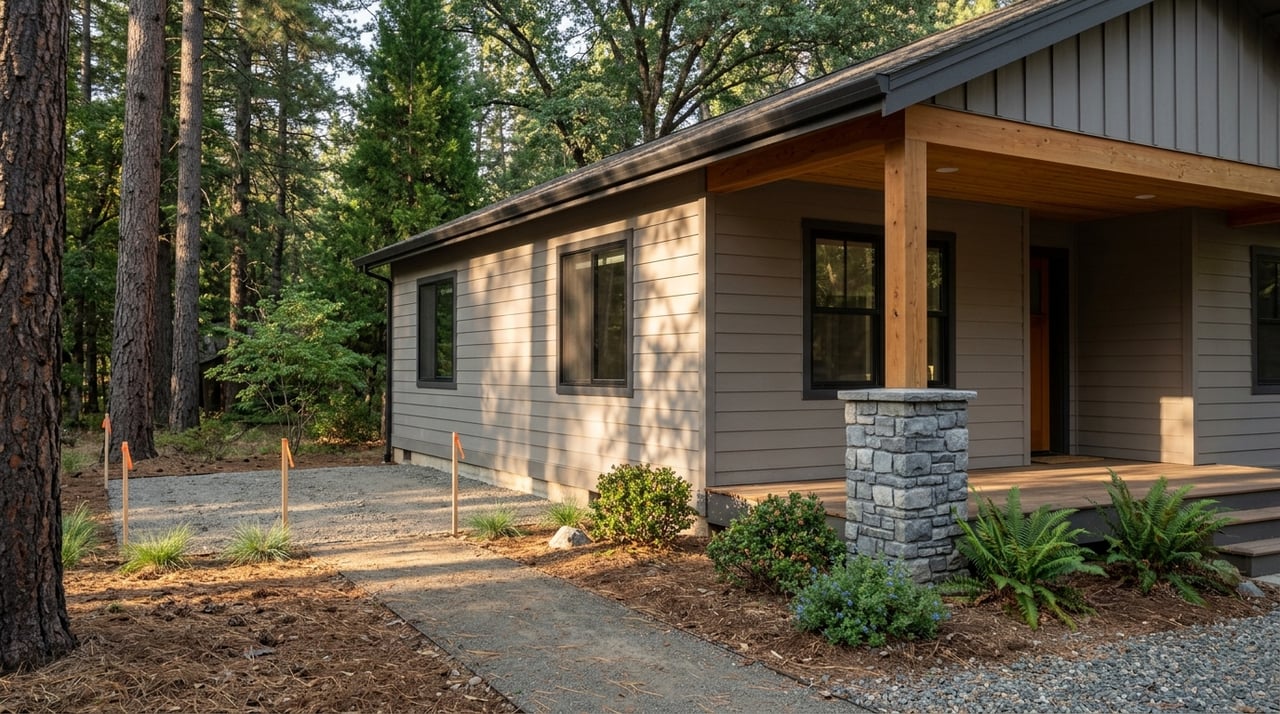
Buying in Camp Connell often starts with a simple question that gets complicated fast: should you buy land and build, or buy a cabin that already exists? If you are dreaming about a mountain getaway or a future full-time home in the 95223 area, both paths can work, but they come with very different timelines, risks, and costs. The good news is that a smart decision usually comes down to a few local factors you can evaluate early. Let’s dive in.
Start With Your Real Goal
Before you compare parcels and cabins, get clear on what you want the property to do for you. If you want to start using the property soon, an existing cabin will usually give you a faster path. If you care most about creating a custom layout, choosing finishes, and shaping the site to fit your vision, land may be the better fit.
Your timeline matters just as much as your budget. In Camp Connell, buying raw land is not just a purchase. It is the start of a development project with county review, site planning, utility questions, and construction decisions layered in.
Camp Connell Is a Mountain Market
In Camp Connell, local conditions shape both choices. Calaveras County places all parcels within a California Wildland-Urban Interface fire hazard severity zone classified as High or Very High. For new construction, county guidance requires compliance with CWUIC standards, along with defensible space and vegetation management, including a noncombustible Zone 0 within 5 feet of structures.
That wildfire reality affects more than design. It can influence where and how you build, what mitigation work you may need to plan for, and how you think about long-term ownership. Even if you buy an existing cabin, fire readiness should be part of your due diligence from day one.
Winter access is another big factor in this area. Calaveras County notes that snow crews push snow to the shoulders, which can leave berms across driveways, and clearing those berms is the resident’s responsibility. The county also says only main roads and school bus routes are sanded when roads are icy.
If you plan to use the property regularly in winter, that matters. A steep driveway, limited turnaround space, or tricky road approach may feel manageable in summer but become a bigger issue when snow arrives.
Why Land Means More Unknowns
Raw land can be exciting because it gives you flexibility. You can choose a floor plan, place the home to capture light or privacy, and create something that matches your needs. In Camp Connell, though, that flexibility comes with a longer list of unknowns than many buyers expect.
Calaveras County’s single-family submittal guide requires a permit application that clearly identifies the full project scope. That can include the home itself, septic system, well, driveway improvements, solar if included, fire sprinklers if applicable, and other site work. In other words, you are not just planning a house. You are planning the whole property system.
Site Plans Need Real Detail
The county requires a site plan showing rights-of-way, easements, setbacks, driveway alignment, road frontage, and existing conditions such as topography, drainage, wells, septic systems, utilities, and hydrants. Proposed grading, utilities, driveway work, septic placement, and disturbance areas must also be shown.
That level of detail matters because two parcels in the same ZIP code can have very different buildability. One lot may look simple online but turn out to have access, slope, or utility challenges that affect cost and timing.
Water and Septic Are Separate Decisions
For vacant land, water and wastewater need their own due diligence. Calaveras County’s onsite wastewater procedures state that an installation permit must be obtained before any construction on the OWTS begins. The county’s well program also regulates the construction and modification of wells to protect groundwater and public health.
That means you should not assume a parcel is ready just because it is listed as buildable. You need to verify what is required for water service, septic design, and site approval before you get too far into budgeting.
Grading Can Change the Budget
In mountain terrain, grading can become a major part of the project. Calaveras County generally requires a grading permit when more than 50 cubic yards of earth are moved, although some smaller projects are exempt.
On a flat or gently sloped site, that may not become a major issue. On a steeper parcel, grading needs can affect driveway design, home placement, drainage planning, and total development cost.
Some Parcels Need Extra Engineering
The county’s residential guide notes that engineering or geotechnical work may be needed for hillside sites or where fill, groundwater, or instability are present. That is one reason land buyers should think in terms of feasibility first and construction second.
A beautiful lot is not always a simple lot. In Camp Connell, slope, soils, access, and exposure can all affect what can be built and what it may take to get there.
Why a Cabin Can Be Simpler
An existing cabin often gives you a clearer path because the home is already standing. You can evaluate the layout, condition, driveway, and overall usability much more easily than you can with a raw parcel. For many buyers, especially second-home shoppers, that clarity reduces stress.
A cabin can also get you into the market faster. If your goal is to enjoy weekends in the mountains soon, or to have a property ready for near-term use, buying an existing home may fit better than waiting through planning, permitting, and construction.
That said, simpler does not mean automatic. You still need to confirm whether the access, utility setup, and site conditions match your plans. If you hope to remodel, add square footage, or make major site changes later, current county requirements for access, setbacks, utilities, and fire-related items may still come into play.
Financing Differences Matter
The way you plan to buy the property can shape your decision as much as the property itself. In general, an existing cabin is often easier to finance than raw land because it is a more conventional purchase.
For second-home buyers, occupancy rules matter. Fannie Mae says a second home must be occupied by the borrower for part of the year, suitable for year-round occupancy, under the borrower’s exclusive control, and not a rental property or timeshare. A property not occupied by the borrower is considered an investment property.
That distinction is important if you are trying to decide between a personal retreat and a property you want to treat primarily as a business asset. Your intended use can affect the financing path available to you.
For raw land, financing can be more specialized. The CFPB notes that properties with non-standard features, including more than 10 acres or difficult appraisal conditions, often fall into niche lending programs. In practical terms, that means vacant rural land can require more specialized financing or a construction-oriented approach than a standard cabin purchase.
Insurance and Wildfire Readiness
Insurance should be part of your decision early, not late. In this market, wildfire exposure is not a side note. It is a core ownership factor.
The California Department of Insurance says wildfire mitigation can help with insurability and may qualify homeowners for discounts under the state’s Safer from Wildfires framework. For buyers comparing land and cabins, that means it is wise to think about mitigation readiness before you close, especially if you are evaluating a property with dense vegetation, tight access, or deferred exterior maintenance.
With land, you are planning future compliance and mitigation as part of the build. With an existing cabin, you are evaluating what is already in place and what may still need attention.
If Rental Income Is Part of the Plan
If you hope to use the property as a short-term rental, do not treat that as an afterthought. Calaveras County planning pages list an Administrative Use Permit for short-term vacation rentals. The county also charges a 12% transient occupancy tax on lodging stays of 30 days or less in the unincorporated area.
That matters for both cabins and future builds. If rental income is central to your plan, you want to evaluate the property through both an ownership lens and an operations lens from the start.
A Simple Way To Decide
If you are stuck between land and a cabin, it helps to ask a few practical questions:
- Do you want to use the property soon, or are you comfortable with a longer timeline?
- Are you excited by a custom build, or would you rather avoid permitting and site-work uncertainty?
- How much risk can you tolerate around access, grading, utilities, and septic?
- Will the property be mainly for your own use, or is rental income part of the plan?
- Are you ready for wildfire mitigation and winter access realities either way?
In Camp Connell, the choice often comes down to this: land makes sense if you want customization and can handle a longer, more technical path. A cabin usually makes more sense if you want earlier use, a clearer financing path, and fewer upfront site unknowns.
Local Knowledge Helps You Compare Better
In a mountain market, the right choice is not always the one that looks best online. A parcel may offer long-term upside but require more feasibility work than expected. A cabin may look turnkey at first glance but still need careful review around access, insurance, or future use goals.
That is where local guidance matters. When you understand how county rules, winter conditions, wildfire requirements, and rental goals fit together, you can choose with a lot more confidence.
If you are weighing land versus a cabin in Camp Connell or elsewhere in the 95223 market, Kip Machado & Team can help you compare options with the kind of local, practical insight that makes mountain property decisions feel much clearer.
FAQs
Should I buy vacant land or a cabin in Camp Connell?
- If you want a faster path to personal use and a more straightforward purchase, a cabin is often the simpler choice. If you want customization and can handle a longer, more technical process, land may be the better fit.
What should I check before buying land in Camp Connell?
- You should verify site access, slope, grading needs, utility feasibility, well and septic requirements, easements, setbacks, and any engineering or geotechnical issues that could affect buildability.
Are wildfire rules important for Camp Connell properties?
- Yes. Calaveras County says parcels in this area are within High or Very High fire hazard severity zones, and new construction must meet CWUIC-related requirements, including defensible space and vegetation management.
Is winter access a big issue in Camp Connell?
- It can be. The county notes that snow berms across driveways are the resident’s responsibility and that only main roads and school bus routes are sanded when roads are icy.
Can I buy a Camp Connell cabin as a second home?
- Potentially, yes, but your intended use matters. Fannie Mae says a second home must be suitable for year-round occupancy, occupied by the borrower for part of the year, under the borrower’s exclusive control, and not treated as a rental property or timeshare.
Do short-term rentals in Camp Connell require local approval?
- Calaveras County planning pages list an Administrative Use Permit for short-term vacation rentals, and the county charges a 12% transient occupancy tax on lodging stays of 30 days or less in the unincorporated area.